top of page


Music Theory Course
The complete college-level music theory course by Phillip Lenberg: 47 video lessons from reading music to sonata form and fugue.

Lesson 35: Bach's C Major Prelude (WTC I): Harmony in Arpeggios, mm. 1–8
Read the notation of one of the most famous keyboard pieces ever written, then analyze its first eight bars, where every measure is one chord spelled out as an arpeggio.

Phillip Lenberg
4 hours ago2 min read
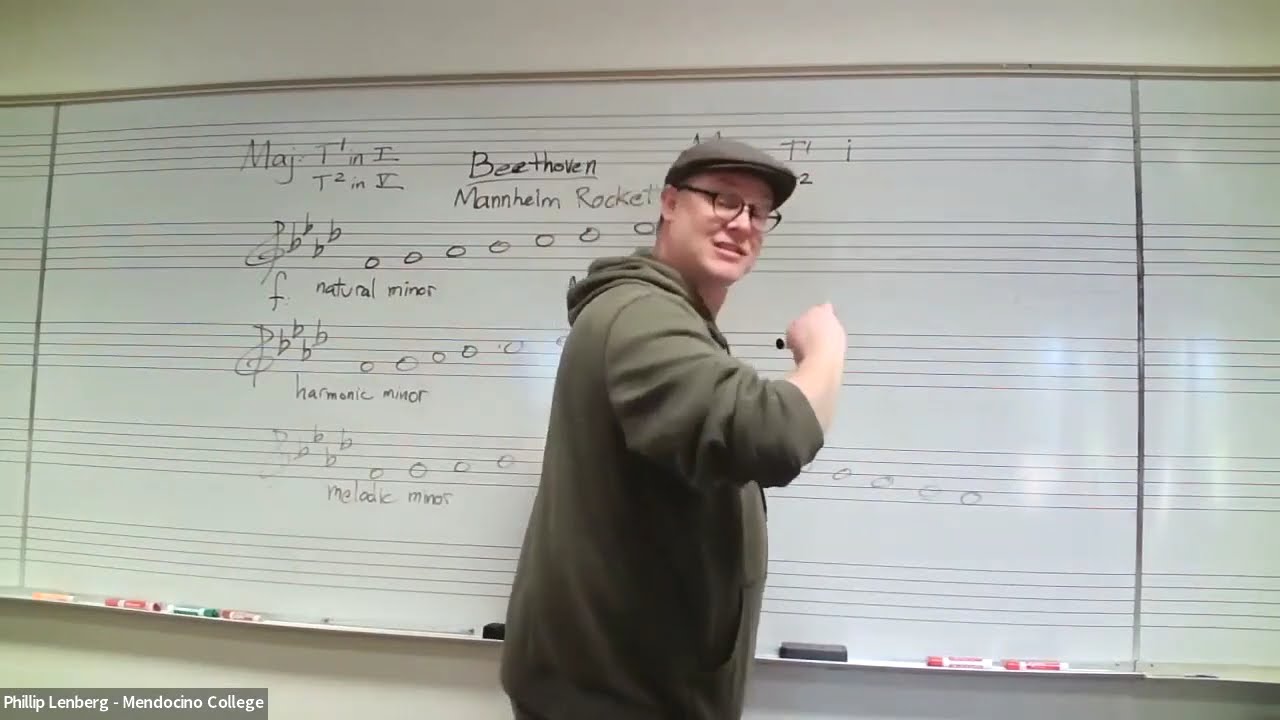
Lesson 34: Sonata Form in a Minor Key: Beethoven's Op. 2 No. 1
Analyze the opening of Beethoven's F minor sonata. See the 'Mannheim rocket,' the dominant with the leading tone in the bass, a dramatic fermata, and where Theme 2 goes in a minor key.
Phillip Lenberg
4 hours ago2 min read

Lesson 6: Ear Training: Rhythmic Dictation
Train your ear to write down the rhythms you hear. We start with quarter, half and eighth notes in 4/4, then tackle what staccato and the dot really mean.
Phillip Lenberg
4 hours ago2 min read

Lesson 24: Finding Non-Chord Tones and Making a Harmonic Reduction
A step-by-step walkthrough of the reduction assignment. Reduce measures 1–22 of Bach's Cello Prelude to one clean chord per bar, separating chord tones from decoration.
Phillip Lenberg
4 hours ago2 min read
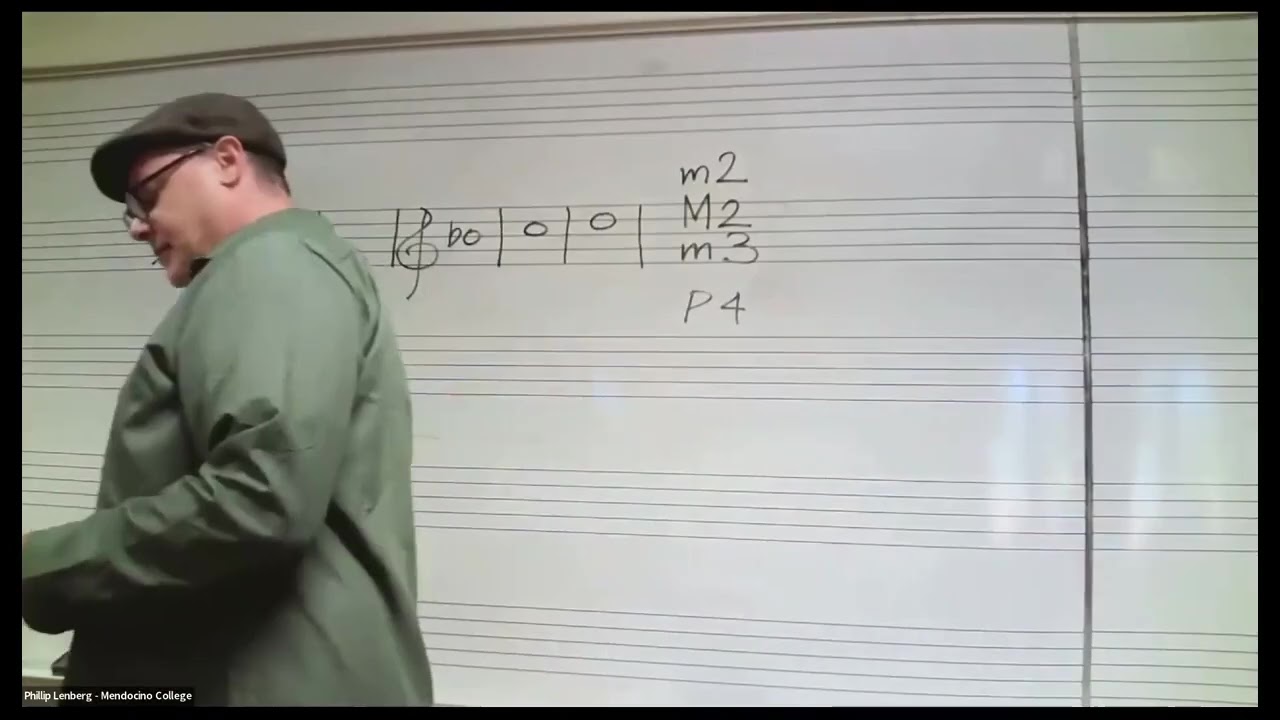
Lesson 27: Ear Training: Intervals and Triad Qualities
Expand your interval ear to minor and major seconds, minor and major thirds and perfect fourths. Learn courtesy accidentals, then tell major, minor, diminished and augmented triads apart by ear.
Phillip Lenberg
4 hours ago2 min read

Lesson 36: Half-Step Resolutions & V/V in Bach's C Major Prelude
Continue through Bach's C major Prelude. Use half-step voice leading to understand major-seventh inversions, V/V and secondary diminished chords in measures 6–12.
Phillip Lenberg
4 hours ago2 min read

Lesson 38: Bach's C Major Prelude to the End: Pedal Point, 4-3 Suspensions & Sequence
Analyze the second half of Bach's C major Prelude, from IV⁴₂ through secondary dominants and diminished chords to the long dominant pedal and final cadence.
Phillip Lenberg
4 hours ago2 min read

Lesson 5: Perfect, Augmented & Diminished Intervals
Learn why fourths, fifths and octaves are 'perfect,' how they become augmented or diminished, and practice hearing and writing intervals from dictation.
Phillip Lenberg
4 hours ago2 min read
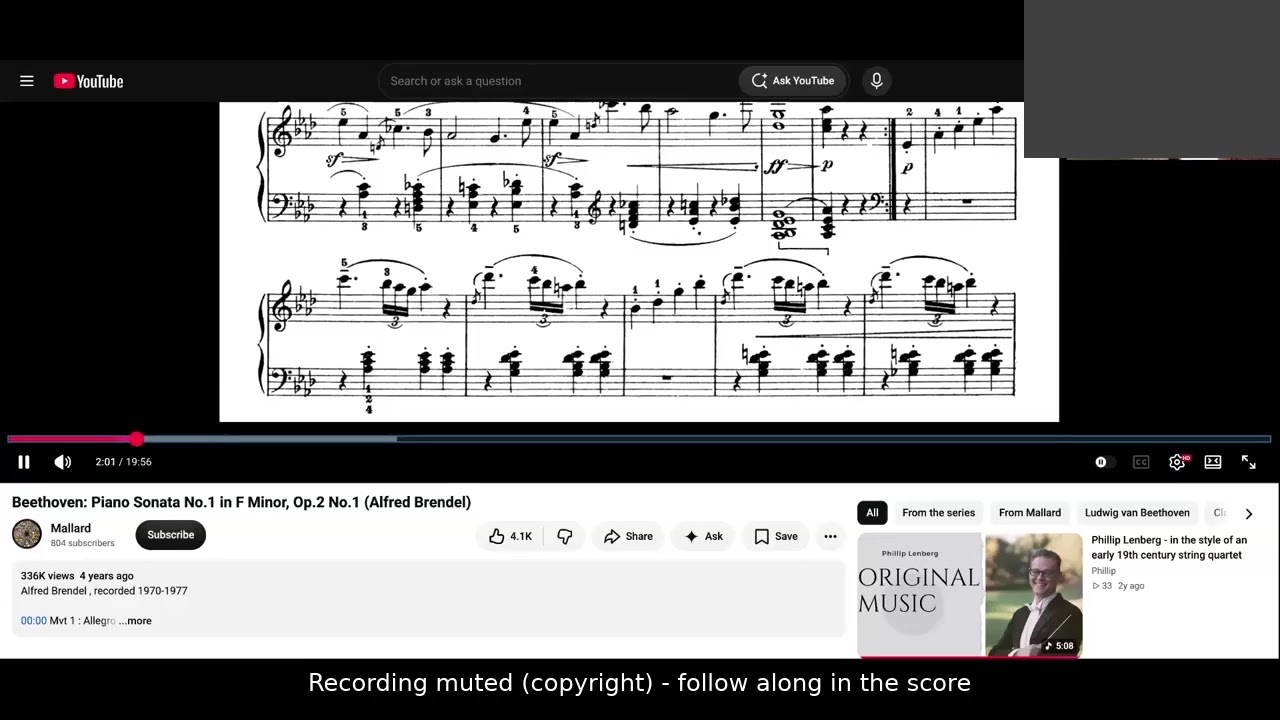
Lesson 40: Development & Recapitulation in a Minor-Key Sonata
Follow Beethoven's Op. 2 No. 1 through its closing section, development and recapitulation. Spot a voice-exchange 'ladder' and compare the returning theme bar by bar.
Phillip Lenberg
4 hours ago2 min read
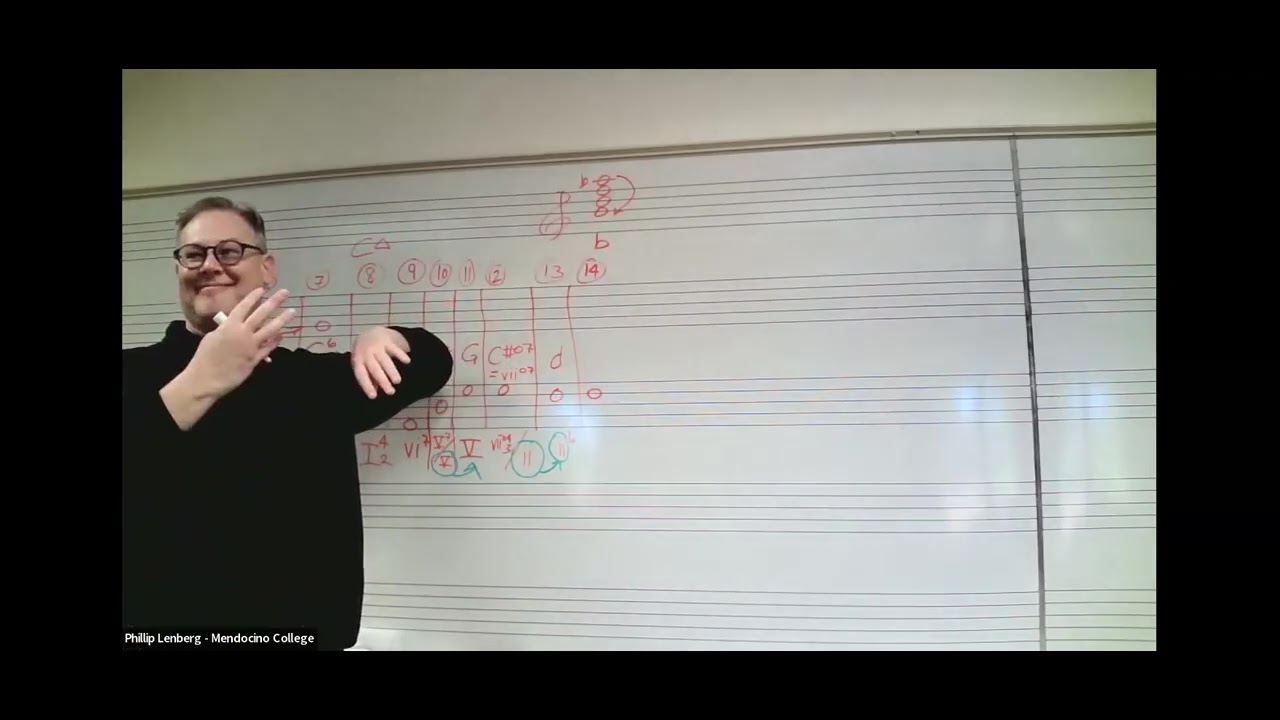
Lesson 37: Diminished 7ths & Borrowing from the Parallel Minor
Spell fully and half-diminished sevenths correctly, see why Bach makes vii° fully diminished by borrowing from C minor, and spot a harmonic sequence.
Phillip Lenberg
4 hours ago2 min read
Lesson 44: Melodic Minor and the Church Modes (Dorian & Friends)
Spot melodic minor in a real score, then step through the seven modes, from Ionian to Locrian, with Miles Davis's "So What," Spanish-sounding Phrygian and blues-ready Mixolydian.
Phillip Lenberg
4 hours ago2 min read

Lesson 3: Transposing a Melody by Interval
Move any melody to a new starting note without changing how it sounds, using two methods: interval-by-interval and by scale degree.
Phillip Lenberg
4 hours ago2 min read

Lesson 13: Phrase Structure in Mozart's K. 283 (and the Hemiola)
Mark phrase lengths in the opening of Mozart's G major sonata, weigh competing interpretations, and discover the hemiola, where triple meter briefly feels like duple.
Phillip Lenberg
4 hours ago2 min read
Lesson 12: Inversions, Articulation & Contrary, Parallel and Oblique Motion
Label an inverted chord with a suspension, decode staccato dots vs. wedges, and name the four kinds of motion between two voices.
Phillip Lenberg
4 hours ago2 min read

Lesson 46: Sonata Form in an Overture: Mozart's Don Giovanni
Apply everything you know about sonata form to the Allegro of Mozart's Don Giovanni Overture. Find Theme 1, the transition, two candidates for Theme 2 and how they return.
Phillip Lenberg
4 hours ago2 min read

Lesson 45: Finishing the Don Giovanni Introduction: Neapolitan 6/4, V/V & the German Sixth
Complete the harmonic analysis of the Don Giovanni Overture's slow introduction. Add secondary dominants, another melodic minor, a Neapolitan in second inversion, and a German sixth to a cadential 6/4 and a 4-3 suspension.
Phillip Lenberg
4 hours ago2 min read

Lesson 2: Major vs. Minor Intervals and Half Steps
Measure the distance between any two notes by counting letter names and half steps, and hear the difference between major and minor seconds and thirds.
Phillip Lenberg
4 hours ago2 min read

Lesson 47: Introduction to the Fugue: Subject & Answer
Step into polyphony. Learn how a fugue works (subject, answer, voices and entries) using Bach's Fugue in D major, and how it differs from a simple round.
Phillip Lenberg
4 hours ago2 min read

Lesson 11: Köchel Numbers, Opus Numbers & Tempo Rubato
Decode the catalog numbers on your scores (Op., K., BWV, D.), learn why Mozart wrote dynamics for the early piano, and explore expressive timing.
Phillip Lenberg
4 hours ago2 min read

Lesson 17: Development & Recapitulation Explained
Finish mapping K. 283's exposition (closing transition and codetta), learn how sentences build momentum, and see how the development and recapitulation complete sonata form.
Phillip Lenberg
4 hours ago2 min read
bottom of page